
Amidst the ongoing conflict in West Asia, the Oil Ministry assures citizens that India's LPG supply remains secure, with no need for panic booking of cylinders. The normal delivery cycle of two-and-a-half days is being maintained, and crude oil is being sourced from diverse routes.

India is well-stocked with inventories of crude oil and key petroleum products, including petrol, diesel, and aviation turbine fuel (ATF), to deal with short-term disruptions as the war intensifies in West Asia, Union Minister of Petroleum and Natural Gas Hardeep Singh Puri said on Tuesday.

India bought 1.87 million barrels of Russian oil per day in May so far, meeting approximately 40 per cent of its oil imports.

The reopening of the Strait of Hormuz, following a ceasefire agreement between the US and Iran, is expected to significantly ease India's crude oil supply risks, lower freight costs, and reduce inflationary pressures, as global oil prices have already dropped.

India will maintain multiple sources for crude oil purchases and diversify them to ensure stability in the supply chain with national interests remaining the "guiding factor" for the procurement, Foreign Secretary Vikram Misri said.

India's procurement of Venezuelan crude oil has picked up momentum since April and the South American nation has already emerged as the third largest oil supplier to the country.

It, however, conceded that 20 per cent blending of ethanol with petrol leads to 3-5 per cent lower mileage in vehicles than conventional petrol, but said the blend offers a significantly higher octane rating, superior anti-knock properties, faster combustion, better pickup, smoother acceleration, and cleaner engine operation.

'Energy prices would shoot up with the closure of Hormuz again.'

A US-sanctioned tanker carrying Iranian crude oil is heading to India, marking the resumption of oil imports from Iran after seven years.

India will continue to purchase Russian oil based on commercial viability and energy security needs, irrespective of US sanctions waivers, according to a senior petroleum ministry official.

External Affairs Minister S Jaishankar has strongly defended India's decision to purchase Russian crude oil, stating that the country's energy choices are based on cost and availability, and highlighting the West's 'hypocrisy' in criticising India while historically supplying weapons used against it.

Indian refiners have access to only limited Iranian volumes compared with Russian oil, and even the barrels on offer come with 'too many hassles'.

Amidst global energy market volatility driven by the West Asia crisis, Russia has proposed increasing its crude oil and natural gas supplies to India, strengthening bilateral energy ties and aiming for USD 100 billion in annual trade by 2030.

Lavrov's comments came two days after Russia accused the US of attempting to prevent India and other countries from buying Russian oil, saying Washington was using a wide range of 'coercive' measures, including tariffs, sanctions and direct prohibitions.
India is closely monitoring developments related to a proposed American legislation that seeks to impose up to 500 per cent tariff on countries procuring Russian crude oil.

The Indian government has allocated an additional 2 million tonnes of surplus broken rice from FCI stocks for its ethanol blending programme, while simultaneously issuing a detailed rebuttal to widespread misinformation regarding the E20 fuel, addressing concerns from water consumption to engine damage and environmental impact.

India has no plans to ration fuel supplies despite ongoing disruptions in global energy markets, according to a top oil ministry official. The country has maintained adequate inventories of crude products and LPG while diversifying imports to manage supply risks.

The Indian government has refuted claims of fuel shortages, asserting that the country possesses approximately 60 days of fuel stock cover and that all petrol pumps are adequately stocked and operating normally.

India is set to reduce its direct imports of Russian crude from late November, following new US sanctions on Rosneft and Lukoil, effective November 21.

Around one full month of supply is firmly arranged with additional procurement being continuously finalised, and oil companies are successfully delivering over 5 million cylinders every day.

India, the world's third-largest oil consumer, spent 2.5 billion euro on buying crude oil from Russia in September, 14 per cent less than the previous month, a European think tank said. India remained the second-largest buyer of Russian fossil fuels in September behind China, according to the Centre for Research on Energy and Clean Air (CREA).

US President Donald Trump has announced plans to clear the Strait of Hormuz to secure the vital oil corridor, citing risks to global energy supplies and criticising other nations' inaction.

External Affairs Minister S Jaishankar defends India's purchase of Russian oil, stating it is not the largest purchaser and that the US had previously supported such actions to stabilize energy markets. He also addresses concerns about tariffs and trade relations with the US.

External Affairs Minister S Jaishankar discussed the West Asia conflict and its impact on energy supplies with his Russian counterpart Sergey Lavrov and EU's Foreign Policy chief Kaja Kallas.
US President Donald Trump warned India about potential tariffs for continuing to purchase oil from Russia, claiming he received assurances from Prime Minister Narendra Modi that India would halt such purchases.
India responds to US President Trump's claim that PM Modi assured him of halting Russian oil imports, stating it is diversifying energy sources to meet market conditions and safeguard consumer interests.

Calling such reports baseless, Finance Minister Nirmala Sitharaman said there was no such move under consideration.

US President Donald Trump claims India has significantly reduced and nearly stopped purchasing oil from Russia, citing de-escalation efforts. This follows previous tensions over tariffs and India's energy sourcing.

24 Indian-flagged vessels with 677 Indian seafarers were currently located west of the Strait of Hormuz, and four vessels with 101 Indian seafarers were stationed east of the strategic waterway.
The Indian government is dealing with the matter having in mind the national interests of this country in the first place, he said.

United States President Donald Trump on Wednesday said Prime Minister Narendra Modi had assured him that India would stop purchasing oil from Russia, describing it as "a big step" in efforts to increase global pressure on Moscow.
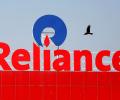
Reliance Industries Limited (RIL) faced a challenging fourth quarter, with its energy business experiencing significant headwinds, leading to overall muted results and prompting analysts to adjust their outlook, even as consumer segments like Jio and retail demonstrated robust growth.

India has rejected White House Trade advisor Peter Navarro's comments on New Delhi for its procurement of Russian crude oil, calling them 'inaccurate and misleading'. The relations between New Delhi and Washington are on a downturn after President Donald Trump doubled tariffs on Indian goods.

In the present hyper-connected world, there are many domestic and global factors that affect financial markets. Of them, the most powerful and often least predictable are geopolitical events, which often boil down to one diplomatic headline.

India said it is broad-basing and diversifying sourcing of petroleum product to meet market conditions.
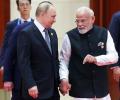
Prime Minister Narendra Modi will host Russian President Vladimir Putin for a private dinner and summit, focusing on defence, trade, and geopolitical issues, including the Ukraine conflict and the impact of US sanctions.

External Affairs Minister S Jaishankar has emphasised India's commitment to safe maritime transit and condemned attacks on merchant shipping amidst the ongoing West Asia conflict and global energy market disruptions.

Using an expletive in his post on X, Navarro said, "Fact: India didn't buy Russian oil in large quantities before Russia invaded Ukraine. It's blood money and people are dying."
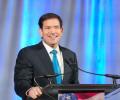
The US sees an opportunity to expand its strategic relationship with Pakistan but assures that it will not come at the expense of its ties with India, according to US Secretary of State Marco Rubio.

India's state-run oil marketing companies (OMCs) are projected to incur under-recoveries of approximately Rs 80,000 crore on liquefied petroleum gas (LPG) sales in FY27 if current loss levels persist, according to rating agency Icra.
